
Starting an affiliate marketing website is one thing. Getting consistent visitors to it is another.
You can publish helpful product reviews, comparison articles, buying guides, and tutorials, but without traffic, even excellent content may struggle to generate affiliate clicks or commissions.
For beginners, the challenge is deciding where to invest limited time. There are several free traffic sources for affiliate marketing, but trying to manage all of them simultaneously can quickly become overwhelming.
Two popular options are Pinterest and Google SEO. Both can help people discover your content without requiring you to pay for every visitor. However, they work in very different ways.
Pinterest is built around visual discovery. Google Search connects users with web pages that match their search queries.
So, which should you prioritize?
For most beginners building an affiliate website, SEO is a valuable long-term foundation, while Pinterest can serve as an additional traffic channel. However, if your niche is highly visual and you can create attractive Pins consistently, Pinterest may be the easier channel to start testing first.
Let’s compare both strategies and explore how to use them together without spreading yourself too thin.
1. How Pinterest Traffic Works for Affiliate Marketing
Pinterest is a visual discovery platform where users search for ideas, inspiration, products, and solutions.
Unlike traditional social networks, where content is often organized around updates from people and accounts users follow, Pinterest helps users discover content through searches, recommendations, and saved Pins.
For affiliate marketers, this creates an opportunity to introduce relevant products to people who are already exploring ideas related to their interests.
Pinterest as a Visual Discovery Platform
Imagine you promote home organization products.
Someone searching Pinterest for “small bedroom storage ideas” might discover a Pin showing a practical storage solution.
If that Pin links to a helpful article on your website, the visitor can explore your recommendations and potentially click an affiliate link.
This process can be applied to many niches, including:
- Home improvement and organization
- Beauty and skincare
- Fitness and wellness
- Kitchen products
- Fashion and accessories
- Gardening and DIY projects
- Gift recommendations
The key is to create content that provides a useful reason for someone to click.
A product image with a generic “Buy Now” message is unlikely to be as informative as a Pin explaining how that product solves a specific problem.
How Pinterest Search and Keywords Work
Pinterest users frequently search for specific ideas rather than simply browsing random content.
For example:
- Best kitchen gadgets for small apartments
- Budget skincare routine
- Home office organization ideas
- Affordable fitness equipment
- Gifts for coffee lovers
These searches provide useful clues about what potential visitors want to discover.
To improve content discoverability, pay attention to:
- Pin titles
- Pin descriptions
- Relevant keywords
- Board titles and descriptions
- Image quality and relevance
- The destination URL
Pinterest also provides trend and analytics tools that can help creators understand which topics attract attention.
According to Pinterest’s business guidance, relevant context, quality visuals, and audience engagement can all contribute to content distribution.
Using Pins to Drive Traffic to Affiliate Websites
A practical Pinterest affiliate marketing strategy is to use Pins as entry points to helpful website content.
For example:
- Write an article about the best budget-friendly coffee makers.
- Create several original Pins highlighting different benefits or selection criteria.
- Use relevant keywords in each Pin’s title and description.
- Link each Pin to the relevant article.
- Include affiliate links within the article where they genuinely help readers.
This approach gives visitors useful information before they encounter a product recommendation.
It also gives you an opportunity to build an audience around your website rather than relying entirely on direct affiliate links.
2. How Google SEO Traffic Works for Affiliate Websites
Google SEO is the process of improving your website so search engines can discover, understand, and potentially show your pages in relevant search results.
Unlike Pinterest, where visual content plays a major role in discovery, Google Search primarily connects users with web pages that help answer their queries.
For affiliate websites, this is particularly useful because people often search for product comparisons, reviews, recommendations, and solutions before making purchasing decisions.
Crawling, Indexing, and Ranking
Google Search works through several important processes.
Crawling: Google uses automated programs called crawlers to discover publicly accessible web pages.
Indexing: Google analyzes discovered pages and may store information about them in its search index.
Ranking and serving results: When someone searches, Google selects and orders relevant results using its ranking systems.
Publishing an article does not guarantee that Google will index it or rank it highly.
That is why affiliate website owners should focus on making their pages accessible, useful, relevant, and easy to understand.
Keyword Research and Search Intent
Keyword research helps you understand what people are searching for.
However, selecting keywords based only on search volume is not enough. You also need to understand why someone is searching.
Consider these examples:
| Search query | Likely search intent |
|---|---|
| What is affiliate marketing? | Informational |
| How does Pinterest affiliate marketing work? | Informational |
| Pinterest vs SEO for affiliate marketing | Commercial investigation |
| Best AI Pinterest marketing tools | Commercial investigation |
| Pin2Profit AI review | Product research |
For affiliate marketers, commercial investigation keywords can be particularly valuable because they often indicate that someone is comparing possible solutions.
However, informational content is also important. It helps build topical relevance, attract new readers, and introduce visitors to your website.
Creating Helpful Affiliate Blog Content
A successful affiliate website should not consist entirely of product promotions.
Readers need useful information before they can make informed decisions.
Consider publishing different types of content:
- Beginner tutorials
- Product comparisons
- Detailed product reviews
- Buying guides
- Problem-solving articles
- Product alternatives
- How-to guides
For example, if your website covers Pinterest marketing, you might publish articles about keyword research, Pin design, campaign planning, and Pinterest analytics.
These articles can support more commercially focused content while helping readers understand the subject.
Google’s Search Central documentation emphasizes original, helpful, reliable, people-first content rather than pages created primarily to manipulate search rankings.
AI-Powered Pinterest Campaign Creation
If you manage multiple product campaigns, preparing every creative asset manually can become time-consuming.
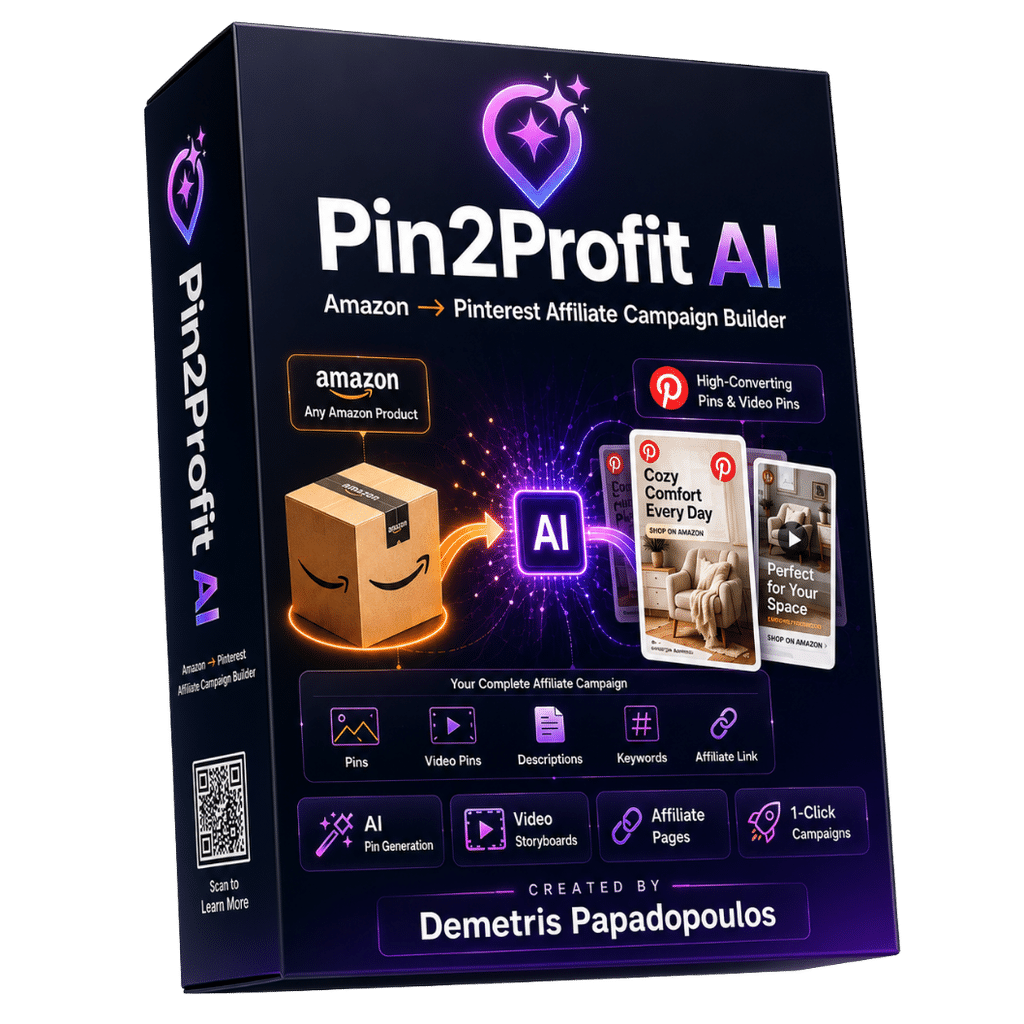
Pin2Profit AI is another option to investigate for this type of workflow.
According to its published product information, its features include an Amazon Product Analyzer, AI Pin Generation, AI Pin Copywriter, Pinterest Keyword Engine, video generation, and an Affiliate Page Builder.
It is advertised as a cloud-based campaign creation tool.
However, there are some important considerations before buying:
- Its product research workflow is focused on Amazon products.
- Some AI features may require your own Google AI API key.
- Image and video generation may involve additional provider charges.
- Included features and limits can vary by plan.
- AI-generated campaign content still needs human review.
If these features match your needs, you can learn more about the product here:
See Pin2Profit AI and Its Features
Why SEO Takes Time to Build
SEO is not usually an instant traffic solution.
A new website needs to establish useful content, become discoverable, earn relevant visibility, and compete with existing pages.
Google explains that changes can take anywhere from hours to several months to be reflected in Search results. Even then, improvements do not guarantee better rankings.
For beginners, this means SEO requires patience and consistent improvement.
3. Pinterest vs Google Traffic: 7 Important Differences
Although both platforms can send visitors to your affiliate website, their discovery systems create different opportunities and challenges.
Here are seven important differences.
3.1 Audience Intent and Search Behavior
Pinterest users often search for ideas, inspiration, and possible solutions.
For example, someone searching for “minimalist home office ideas” might be exploring different designs without intending to purchase anything immediately.
Google users may have a more specific problem or question.
Someone searching for “best ergonomic office chair under $200” is likely comparing products and considering a purchase.
This distinction matters because the visitor’s level of buying interest can influence how you structure your content.
However, Pinterest also has shopping-oriented searches, and Google users do not always have commercial intent.
Neither platform guarantees higher conversions.
3.2 Content Creation Requirements
Pinterest requires attractive visual content.
You need to create relevant Pins, write descriptions, select appropriate keywords, and link each Pin to a useful destination.
Google SEO requires a different set of skills.
You need to understand search intent, conduct keyword research, structure articles, provide useful information, and maintain website quality.
Here is a simplified comparison:
| Pinterest content | Google SEO content |
|---|---|
| Vertical images | Blog articles |
| Pin titles | SEO titles |
| Pin descriptions | Article content |
| Board organization | Website structure |
| Visual design | On-page optimization |
| Pin analytics | Search Console analytics |
You can repurpose ideas between both channels, but each platform still needs content designed for its audience.
3.3 Content Lifespan
One interesting advantage of Pinterest is that older Pins can continue receiving engagement.
A Pin published months ago may become relevant again when users search for a seasonal topic or discover it through recommendations.
Pinterest states that Pins do not have a fixed engagement window. They may receive engagement hours, days, months, or even years after publication.
Google SEO content can also generate traffic over an extended period.
A well-maintained article may continue attracting visitors as long as it remains relevant and competitive in search results.
However, both platforms can experience changes in visibility.
Neither Pinterest Pins nor Google rankings should be treated as permanent traffic assets.
3.4 Time Required to Generate Traffic
Pinterest can sometimes provide early visibility without requiring your website to rank in Google.
However, this does not mean every new account will receive immediate clicks.
Your results depend on content quality, relevance, competition, audience interest, and platform distribution.
Google SEO usually requires a longer investment, especially for new websites competing against established publishers.
A useful approach is to test Pinterest while gradually building your website’s search visibility.
This allows you to work toward short-term discovery opportunities without abandoning long-term organic growth.
3.5 Content Optimization and Maintenance
Pinterest optimization focuses on visual relevance, keywords, Pin quality, and audience engagement.
You may need to create new Pin designs, update seasonal content, and review analytics to understand which topics perform well.
SEO maintenance focuses on different activities:
- Updating outdated information
- Improving weak articles
- Fixing broken links
- Reviewing search performance
- Improving internal linking
- Monitoring indexing and technical issues
Both strategies require ongoing attention.
The main difference is the type of work involved.
3.6 Algorithm Changes and Traffic Consistency
Neither Pinterest nor Google offers guaranteed organic reach.
Pinterest distribution can change depending on user engagement, relevance, seasonal trends, and other factors.
Google Search rankings can also fluctuate as its systems evolve, competitors publish new content, and user expectations change.
Relying on a single platform creates risk.
For example, if most of your website traffic comes from Pinterest and your reach suddenly declines, your affiliate business may be affected.
The same risk exists if your website depends heavily on a small number of Google rankings.
Building more than one relevant traffic channel can help reduce dependence on a single source.
3.7 Affiliate Conversion Opportunities
Pinterest can introduce products to people who are exploring ideas and looking for inspiration.
Google can connect your website with people searching for detailed product information and comparisons.
For example:
A Pinterest visitor discovers a Pin about home office accessories and clicks through to your website.
A Google visitor searches for a comparison of two specific office chairs and lands on your buying guide.
Both visitors may eventually click an affiliate link, but their expectations and readiness to purchase could be different.
The important thing is to match the landing page with the visitor’s original interest.
4. Advantages and Disadvantages of Pinterest Marketing
Before choosing Pinterest as your primary traffic channel, consider its strengths and limitations.
Benefits of Pinterest Traffic
1. Visual content discovery
Pinterest is particularly suitable for products and niches where images communicate value effectively.
2. Opportunities for new websites
You can publish original Pins that link to your website without first achieving strong Google rankings.
3. Evergreen discovery potential
Relevant Pins can continue receiving engagement long after publication.
4. Multiple content formats
You can experiment with static images, video Pins, product ideas, and different creative angles.
5. Repurposing existing content
One helpful blog article can become the foundation for several different Pinterest Pins.
Limitations of Pinterest Marketing
1. Consistent visual production
You need to create relevant and attractive graphics regularly.
2. Unpredictable distribution
Not every Pin receives the same level of visibility or engagement.
3. Niche suitability
Some topics are naturally more visual than others.
4. Platform dependence
Your results can change when Pinterest updates its distribution systems or user behavior changes.
Pinterest can be an excellent discovery channel, but it should not be your entire affiliate marketing strategy.
5. Advantages and Disadvantages of SEO Traffic
SEO offers a different type of opportunity.
Instead of depending primarily on visual discovery, you create website content that addresses specific search queries.
Benefits of SEO for Affiliate Websites
1. Search-driven visitors
SEO can connect your content with people actively looking for answers, comparisons, and product recommendations.
2. Long-term traffic opportunities
A useful article that maintains its relevance and visibility can attract visitors over an extended period.
3. Commercial-intent content
Product reviews, comparisons, and buying guides can target searches associated with purchasing decisions.
4. Building website authority
Publishing related, helpful articles can establish your website as a useful resource within a specific subject area.
5. Content ownership
Your website gives you a central destination where you can publish articles, organize resources, and build an email audience.
Limitations of SEO Traffic
1. Slow progress
New websites may need considerable time to establish search visibility.
2. Competition
Popular affiliate keywords can be difficult to rank for.
3. Continuous maintenance
Articles may need updates as products, prices, features, and search results change.
4. Technical requirements
You need to pay attention to indexing, mobile usability, site performance, internal links, and other technical factors.
SEO is a valuable long-term strategy, but it requires consistent work and realistic expectations.
6. Which Traffic Strategy Should Affiliate Marketing Beginners Choose?
There is no universal answer.
The right decision depends on your niche, available time, content creation skills, and business goals.
When Pinterest Is a Better Starting Point
Pinterest may be a good first channel if:
- Your niche is highly visual.
- You promote physical products.
- You enjoy creating graphics and visual content.
- You can publish original Pins consistently.
- You want to experiment with discovery outside Google Search.
For example, someone promoting kitchen accessories, beauty products, home decor, or gardening products may find Pinterest particularly relevant.

When Google SEO Deserves More Attention
SEO may deserve priority if:
- Your website focuses on educational content.
- You publish detailed tutorials and comparisons.
- Your audience searches for specific solutions.
- You can produce well-researched articles.
- You want to build a long-term content library.
For example, a website covering software tutorials, AI tools, business solutions, and affiliate marketing education may benefit significantly from search-focused content.
How Your Niche Influences the Decision
Different niches naturally support different content formats.
| Affiliate niche | Potentially suitable channel |
|---|---|
| Home decor | Pinterest + SEO |
| Beauty products | Pinterest + SEO |
| Kitchen gadgets | Pinterest + SEO |
| AI software | SEO + Pinterest |
| Business software | SEO |
| Gardening | Pinterest + SEO |
| Educational digital products | SEO + Pinterest |
These are starting points, not guaranteed performance rankings.
The best strategy is to test where your actual audience discovers and engages with your content.
7. How to Combine Pinterest and SEO for a Small Affiliate Website
For many beginners, combining both platforms is more practical than trying to choose only one.
You do not need to produce completely different content for each channel.
Instead, create one useful piece of website content and adapt it for Pinterest.
Here is a manageable workflow.
Step 1: Build a Focused Affiliate Website
Start with a specific niche and a clear target audience.
Avoid publishing unrelated content simply because a product offers an attractive commission.
Your website should help readers solve problems within a recognizable subject area.
Create essential pages such as:
- About Us
- Contact
- Privacy Policy
- Affiliate Disclosure
Make sure your website is mobile-friendly and easy to navigate.
Step 2: Publish Helpful SEO-Optimized Blog Articles
Create content around topics your audience actually searches for.
For example, if you cover Pinterest affiliate marketing, you could publish:
- Pinterest affiliate marketing for beginners
- How to find Pinterest keywords
- How to create Pinterest Pins that attract clicks
- Pinterest marketing tools for affiliate marketers
- Pinterest vs Google SEO
Each article should have a distinct purpose and provide information that readers can use.
Do not publish multiple articles that repeat essentially the same information just to increase your content count.
Step 3: Turn Blog Articles and Products into Pinterest Content
After publishing an article, identify several useful angles that could become individual Pins.
For example, an article about Pinterest keyword research could produce Pins such as:
- 5 Pinterest Keyword Research Tips
- How to Find Pinterest Keywords
- Pinterest SEO Mistakes Beginners Should Avoid
- A Beginner’s Pinterest Keyword Checklist
Use different designs and headlines, but make sure every Pin accurately represents its destination.
Step 4: Optimize Pins with Relevant Keywords
Use relevant search phrases naturally in your Pin titles, descriptions, and board organization.
Pinterest recommends vertical creative formats. Its business guidance commonly recommends a 2:3 aspect ratio for standard image Pins.
Avoid keyword stuffing or repeatedly publishing identical Pins.
Focus on making the visual useful and understandable even before someone clicks it.
Step 5: Track Website Traffic and Affiliate Clicks
Use Google Analytics 4 to understand how visitors reach your website and which pages attract engagement.
Use Google Search Console to monitor search performance, indexing, and organic queries.
Pinterest Analytics can help you evaluate impressions, saves, and Pin clicks.
For affiliate marketing, also monitor outbound affiliate clicks and conversions where tracking is available.
Do not judge a channel only by impressions.
A Pin with fewer impressions but relevant website visitors may be more useful than one receiving many impressions without meaningful engagement.
Step 6: Improve Your Strategy Using Performance Data
After collecting enough data, identify which content deserves more attention.
Ask yourself:
- Which blog articles attract organic visitors?
- Which Pins generate website clicks?
- Which topics attract relevant readers?
- Which pages generate affiliate clicks?
- Which content needs improvement?
Use these findings to decide what to publish next.
A useful tool to consider for Pinterest campaign creation
Creating Pinterest campaigns manually can involve several separate activities: researching products, identifying promotional angles, creating Pins, writing descriptions, selecting keywords, and organizing campaign assets.
If you want an AI-assisted workflow for these activities, Pin2Profit AI is a tool worth exploring.
It is designed around Amazon product research and Pinterest affiliate campaign creation. Its advertised features include AI-generated Pins, promotional copy, keyword assistance, video Pins, and an affiliate page builder.
If you want to see whether its features fit your Pinterest marketing workflow, you can explore it here:
The tool is not a replacement for understanding your audience, choosing relevant products, or creating genuinely useful content. Review its pricing, plan limitations, and any additional AI-provider costs before purchasing.
8. Pinterest Marketing Tools That Can Help Beginners
You do not need dozens of paid subscriptions to begin building a Pinterest marketing workflow.
Start with a small set of tools that support the activities you actually need.
Pinterest Business Account and Analytics
A Pinterest Business account gives you access to business-oriented features and analytics.
You can use it to:
- Publish Pins
- Organize boards
- Review engagement
- Monitor Pin clicks
- Explore relevant trends
Claiming your website can also help you access analytics associated with content published from your domain.
Canva for Pinterest Graphics
Canva is a useful option for beginners who need to create visual content.
You can use it to create:
- Product recommendation Pins
- Blog promotion graphics
- Step-by-step tutorials
- Comparison graphics
- Checklist Pins
You can begin with its free features and upgrade only if you need additional capabilities.
Keyword Research and Content Planning
Keyword research should be part of your regular Pinterest workflow.
Use Pinterest search suggestions, Pinterest Trends where available, and relevant audience questions to identify topics.
You can also maintain a simple spreadsheet to organize:
- Target keywords
- Pin titles
- Blog URLs
- Board names
- Publishing dates
- Performance results
9. Frequently Asked Questions
Is Pinterest better than SEO for affiliate marketing?
It depends on your niche and audience.
Pinterest can be useful for visual product discovery, while Google SEO can attract visitors searching for specific information, solutions, and product comparisons.
For many affiliate websites, using both channels is a sensible long-term approach.
Can beginners get free traffic from Pinterest?
Yes. Beginners can publish organic Pins without paying for advertising.
However, organic visibility is not guaranteed. You still need relevant topics, quality visuals, suitable keywords, and consistent content creation.
How long does Google SEO take to generate traffic?
There is no fixed timeline.
Some pages may appear in search results relatively quickly, while others may take months to develop meaningful visibility.
Results depend on competition, content quality, indexing, website history, and many other factors.
Can I use Pinterest and Google SEO together?
Absolutely.
A practical approach is to publish an SEO-focused blog article and then create several Pinterest Pins that lead to that article.
This allows you to use one core content asset across two discovery platforms.
Is Pinterest good for Amazon affiliate marketing?
Pinterest can be relevant for Amazon product discovery, especially in visual niches such as home decor, kitchen accessories, beauty, and lifestyle products.
However, affiliate marketers must follow the applicable Pinterest rules and Amazon Associates requirements.
Always check the current terms governing affiliate links, disclosures, and permitted traffic sources.
What are the best free traffic sources for affiliate marketing?
There is no single best source for every affiliate business.
Depending on your niche, useful organic channels may include:
- Google Search
- YouTube
- Organic social media
- Relevant online communities
- Email marketing to an audience you have permission to contact
Start with one primary channel and one supporting channel rather than trying to manage everything simultaneously.
Final Verdict: Pinterest or SEO?
If you are a beginner with limited time, you do not need to master every traffic platform immediately.
Pinterest and Google SEO offer different advantages.
Pinterest helps people discover visual ideas, products, and solutions. Google SEO helps connect your website with people searching for relevant information and recommendations.
For most beginners building a long-term affiliate website, I would prioritize SEO as the foundation and use Pinterest to distribute and repurpose relevant content.
If your niche is highly visual, you can reverse that order and start testing Pinterest first while gradually developing your website’s SEO.
The most important thing is to build a repeatable content workflow.
Publish useful articles. Turn those articles into relevant Pins. Track which channels attract meaningful visitors. Improve what works.
You do not need to be everywhere. You need to be consistent where your audience is.