Artificial intelligence has made it easier to work on tasks that once required specialized software, extensive experience, or hours of manual effort. But knowing how to use ChatGPT or another AI tool doesn’t automatically create an income opportunity. The real opportunity is learning how to use these tools to solve problems that people and businesses are already willing to pay for.
For example, a small business might need social media content every week. A content creator may need help turning long videos into short clips. An online store might need clearer product descriptions. These are practical services where AI can assist with the work, while a person remains responsible for quality, creativity, and delivery.
The good news is that you don’t need to be a programmer or advanced technology expert to explore these opportunities.
In this guide, we’ll look at seven AI side hustles for beginners, including what each service involves, how AI can help, who might pay for it, and how to get started.
1. Start an AI-Assisted Content Writing Service
Businesses need content to communicate with customers, explain their products, and attract visitors through search engines. However, consistently producing useful articles, website content, and email newsletters takes time.
This creates an opportunity for beginners who enjoy writing and are willing to learn how to use AI responsibly.
An AI-assisted content writing service helps clients produce better-organized, more efficient content without relying entirely on automated output.
What services can you offer?
You could begin with a small selection of writing services:
- Blog post drafts and article outlines.
- Website page content.
- Email newsletters.
- Product descriptions.
- Social media captions.
- Content updates and rewriting.
For example, imagine a local fitness business wants to publish two educational blog posts each month. You could use AI to brainstorm topics, organize research, and prepare an initial draft. Your responsibility would be to verify information, improve the writing, add relevant examples, and deliver a polished article.
How AI helps
Tools such as ChatGPT can assist with brainstorming, outlining, summarizing source material, and improving sentence clarity.
However, AI-generated information can be inaccurate or incomplete. You must verify factual statements, avoid copying existing material, and make sure the final content genuinely answers the client’s audience questions.
How to get started
Choose one writing service rather than advertising yourself as an expert in everything. Create two or three sample articles in a particular subject area, organize them into a simple portfolio, and approach relevant businesses or independent website owners.
Best suited for: People who enjoy writing, research, editing, and communication.
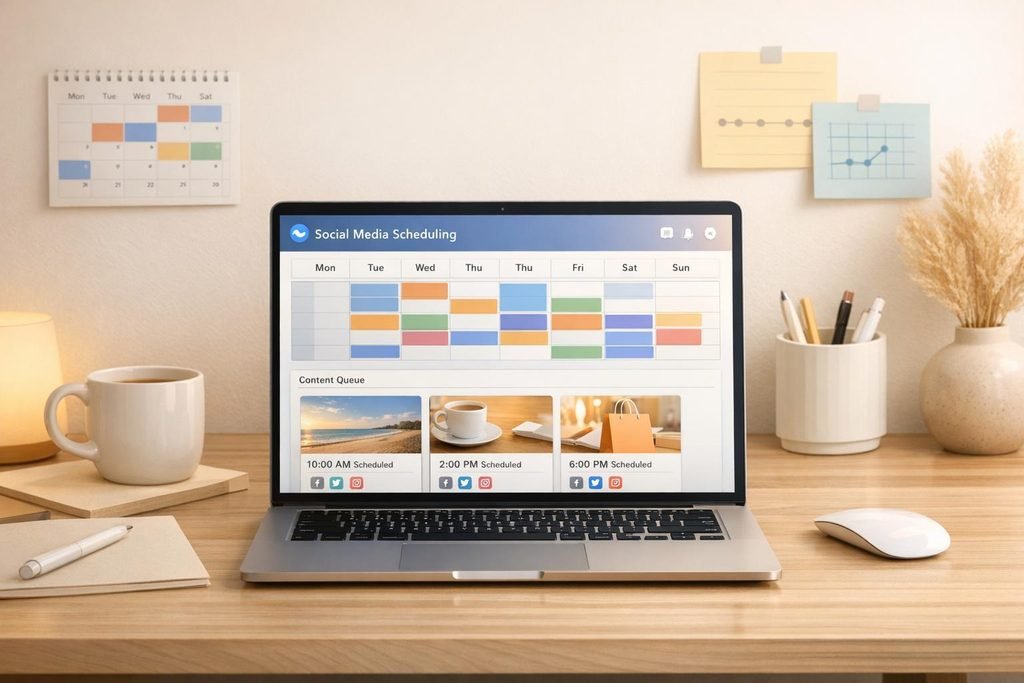
2. Offer AI-Powered Social Media Content Creation
Many small businesses understand that social media matters, but they struggle to publish consistently.
A restaurant might need weekly promotional posts. A fitness coach may want educational Instagram content. An online store might need product-focused posts for Facebook and Pinterest.
You can help these businesses plan and create their social media content using AI-assisted workflows.
What can you create?
Possible services include:
- Social media captions.
- Monthly content calendars.
- Educational posts.
- Promotional graphics.
- Pinterest pin descriptions.
- Content ideas and post variations.
- Platform-specific content adaptations.
For example, a small skincare business might need a month’s worth of educational social media content. You could develop a content calendar, draft captions, create branded graphics, and organize the posts into a delivery document.
AI tools that can help
ChatGPT can help generate content ideas, organize calendars, and draft captions. Canva can help you create visual designs using templates and design tools.
The important part is adapting content to each platform. A LinkedIn post should not automatically look like an Instagram caption, and a Pinterest description has different requirements from an X post.
How to find clients
Start by identifying small businesses with inconsistent or poorly organized social media accounts. Prepare a few sample posts for a hypothetical brand or a clearly labelled portfolio project.
You could offer a simple starter package containing:
- 12 social media captions.
- 8 branded graphics.
- A monthly content calendar.
- Suggested hashtags and posting themes.
Make sure the scope, revision limits, and delivery schedule are clear before accepting a project.
Best suited for: Creative beginners interested in social media, branding, and digital marketing.
3. Create Professional Presentations With AI
Presentations are used in education, business meetings, training sessions, sales discussions, and project proposals.
Yet creating a clear presentation involves more than putting text on slides. Information must be organized, key messages identified, and visual elements arranged so the audience can understand the subject.
AI can help simplify parts of this process.
What presentation services can you offer?
You could create:
- Business presentations.
- Educational slides.
- Training materials.
- Project proposals.
- Sales presentations.
- Webinar slides.
- Presentation redesigns.
Consider a small business owner who has a 15-page document but needs a concise presentation for a meeting. You could use AI to help identify the main points, organize the content into sections, and develop an initial slide outline.
You would then use Canva or PowerPoint to create the actual slides, check the information, and improve the visual hierarchy.
How AI makes the process easier
AI can help turn lengthy information into shorter explanations, suggest slide structures, and improve headings.
Presentation tools can also provide design assistance and layouts.
However, automatically generated slides often need editing. Some may contain too much text, inconsistent formatting, or visuals that do not support the message.
Your job is to make the final presentation clear, accurate, and appropriate for its intended audience.
How to build your first portfolio
Create three sample presentations:
- A small business marketing strategy.
- An educational presentation.
- A project proposal.
Keep each example visually consistent and easy to understand. These samples can demonstrate your ability to organize information and communicate ideas.
Best suited for: People with an interest in visual communication, organization, and design.
4. Provide AI-Assisted Research and Document Organization
Not every business problem requires a complicated technical solution. Sometimes, people simply need help organizing information.
Freelancers, consultants, business owners, and content creators often work with scattered notes, lengthy documents, research materials, and unorganized information.
You can offer a service that turns this material into structured, readable documents.
What work can you provide?
Examples include:
- Organizing research notes.
- Preparing research summaries.
- Structuring meeting notes.
- Creating information briefs.
- Organizing frequently asked questions.
- Converting unstructured notes into organized documents.
- Preparing topic research summaries.
Imagine a consultant who has collected information from several publicly available reports. They need a short document summarizing the main findings.
You could use AI to help organize the material, identify recurring themes, and prepare an initial summary. You would then verify the original sources and ensure the summary accurately represents them.
What skills do you need?
You don’t need advanced programming knowledge, but you do need attention to detail.
Important skills include:
- Reading comprehension.
- Information organization.
- Clear writing.
- Source verification.
- Basic document formatting.
- Confidentiality awareness.
Never upload confidential client information into an AI service without permission and an appropriate understanding of that tool’s data-handling terms. For sensitive work, use approved systems or handle the information without external AI processing.
Best suited for: Organized people who enjoy research, reading, and working with documents.
5. Offer AI-Assisted Short-Form Video Editing
Short videos are an important content format for businesses, educators, and online creators.
However, producing short videos regularly can be time-consuming, particularly when a creator already has hours of recorded footage.
This is where AI-assisted video editing can help.
What services can you offer?
You could help clients with:
- Turning long videos into short clips.
- Adding subtitles and captions.
- Removing unnecessary pauses.
- Creating simple transitions.
- Resizing videos for different platforms.
- Adding titles and basic visual elements.
- Preparing short promotional videos.
For example, a podcast creator may publish a 30-minute episode but want several short clips for YouTube Shorts, Instagram Reels, and TikTok.
You could review the recording, identify useful sections, edit the clips, add accurate subtitles, and prepare the final videos in the required formats.
Useful tools
Some tools worth exploring include:
- CapCut for beginner-friendly video editing.
- Descript for text-based editing and transcription workflows.
- Canva for simple video graphics and layouts.
AI features can speed up transcription, caption creation, and some editing tasks. However, you still need to check subtitle accuracy, choose useful clips, and make sure the finished videos communicate the intended message.
How to start
Create a small portfolio using footage you own or have permission to edit. Produce three sample clips with different styles, such as an educational clip, a podcast highlight, and a promotional video.
Show potential clients the original footage and your finished version so they can understand the value of your editing service.
Best suited for: Beginners interested in storytelling, video editing, and social media content.

6. Design and Sell Digital Templates
Digital templates are reusable resources that help people complete everyday tasks more easily.
Instead of selling a service to one client at a time, you can create a digital product that multiple customers may purchase.
AI can assist with planning the template, organizing its content, and generating ideas for useful layouts.
What templates can you create?
Some beginner-friendly possibilities include:
- Weekly planners.
- Budget trackers.
- Social media content calendars.
- Business checklists.
- Study planners.
- Project management templates.
- Habit trackers.
- Small business worksheets.
For example, you could create a social media content calendar for small business owners. It might include monthly planning pages, content categories, post ideas, publishing dates, and performance tracking sections.
AI could help you brainstorm the structure and suggest useful sections. You would then design the actual template using Canva, Google Sheets, or another suitable tool.
Where can you sell them?
Potential marketplaces and platforms include:
- Etsy.
- Gumroad.
- Payhip.
- Your own website.
Before listing a product, check each platform’s current selling policies, fees, and requirements.
What should beginners understand?
Creating a template is only the first step. You also need a clear target audience, useful functionality, attractive design, accurate instructions, and a way to reach potential buyers.
Competition can be significant, especially for generic planners and checklists. A template designed for a specific audience may offer a clearer reason to purchase.
Best suited for: Creative and organized people interested in digital products and online business.
7. Offer AI-Assisted Product Listing Optimization
Online stores need product descriptions that explain what an item does, who it is suitable for, and why its features matter.
Writing these descriptions can become repetitive when a store has dozens or hundreds of products.
You can help store owners improve their product listings with AI-assisted research, writing, and organization.
What services can you offer?
Potential deliverables include:
- Product title improvements.
- Product description rewriting.
- Feature and benefit organization.
- Product specification formatting.
- Frequently asked questions.
- Product category descriptions.
- Consistent listing templates.
For example, imagine an online store selling home organization products. Some listings may have vague titles and descriptions that simply repeat technical specifications.
You could organize the verified product information, identify the main customer benefits, and write clearer descriptions.
How AI helps
AI can help transform technical product information into readable descriptions, suggest alternative headings, and maintain consistent writing structures.
But there is an important limitation: AI must not invent product specifications, materials, warranties, compatibility information, or performance claims.
Always work from verified information supplied by the client or manufacturer.
How to get your first project
Choose a small online store and prepare a demonstration using publicly available product information. Clearly label it as a sample, not an official client project.
Show how you improved the structure, readability, and organization of the listing without changing the underlying facts.
Best suited for: Beginners interested in writing, ecommerce, and product research.
How to Choose the Right AI Side Hustle for Your Skills
You don’t need to start all seven opportunities. In fact, trying to learn everything simultaneously can make it harder to develop a marketable skill.
A better approach is to choose one service that matches your interests and existing abilities.
Here is a simple comparison:
| Side hustle | Main skill | Potential customers |
|---|---|---|
| Content writing | Writing and editing | Bloggers and businesses |
| Social media content | Creativity and marketing | Small businesses |
| Presentation design | Visual communication | Professionals and businesses |
| Research and organization | Research and attention to detail | Consultants and businesses |
| Video editing | Editing and storytelling | Creators and podcasters |
| Digital templates | Design and organization | Individuals and professionals |
| Product listing optimization | Copywriting and product research | Online stores |
Ask yourself three questions:
- Which activity would I enjoy learning and doing regularly?
- Can I create a useful sample without purchasing expensive software?
- Can I identify a specific type of customer who might need this service?
Your answers can help narrow the options.
An optional resource to explore
If you’re interested in exploring structured AI-assisted approaches to side hustles, you can also investigate Side Hustle AI Agents by TechMagnus.
Before purchasing, review the current offer details, what is included, any usage requirements, and whether the resource supports the type of service you want to develop.
You can explore Side Hustle AI Agents here.
This is an optional affiliate resource, not a requirement for starting any of the seven opportunities discussed above.
How to Start Your First AI Side Hustle: A Simple Beginner Plan
Once you have selected an idea, focus on turning it into a small, clearly defined service.
Here is a practical starting plan.
Step 1: Choose one service
Avoid advertising yourself as someone who can do everything with AI.
Instead, choose a specific deliverable.
For example:
- Eight social media graphics.
- Four edited short-form videos.
- Two blog article drafts.
- One professionally organized presentation.
- Ten optimized product descriptions.
A clear offer makes it easier for customers to understand what you provide.
Step 2: Learn the essential tools
You don’t need to subscribe to every AI platform.
Start with a small toolkit based on your chosen service.
For example:
- Writing: ChatGPT and Google Docs.
- Social media: ChatGPT and Canva.
- Presentations: ChatGPT and PowerPoint.
- Research: ChatGPT and Google Docs.
- Video editing: CapCut.
- Templates: Canva and Google Sheets.
- Product listings: ChatGPT and Google Docs.
Free plans and features can change, so check current limitations before building your workflow around a particular tool.
Step 3: Create three portfolio samples
Clients need evidence that you can complete the work.
You can create sample projects without having paid customers, provided you label them honestly.
For example, if you want to offer social media services, create a fictional business and prepare several example posts.
If you want to become a video editor, use footage you own or have permission to edit.
Your portfolio should demonstrate the quality of the final deliverable, not simply show screenshots of AI prompts.
Step 4: Develop a simple service package
Make your offer specific.
Explain:
- What the client receives.
- How many items are included.
- The expected delivery time.
- How many revisions are included.
- What information you need from the client.
Clear expectations help avoid misunderstandings.
Step 5: Find potential clients
You can explore several channels:
- Upwork.
- Fiverr.
- LinkedIn.
- Relevant Facebook business groups.
- Direct outreach to small businesses.
- Your own professional network.
Avoid sending generic messages to hundreds of people. Identify businesses that genuinely need your service and explain how your specific deliverable could help.
Step 6: Deliver carefully and improve
Your first projects are an opportunity to learn how clients evaluate your work.
Ask for feedback, identify recurring problems, and improve your workflow.
As you become more confident, you can refine your packages and specialize in a particular customer group.
Important Things to Know Before Starting an AI Side Hustle
AI can make certain tasks faster, but it does not remove the responsibilities involved in providing a professional service.
Keep these considerations in mind.
1. AI-generated information needs fact-checking
AI tools can produce incorrect facts, outdated information, and misleading explanations.
Always verify important information before delivering work to a client.
Google Search Central also advises publishers to prioritize accuracy, quality, and relevance when using generative AI. Its guidance specifically emphasizes reviewing AI-generated material for accuracy and trustworthiness.
2. Understand copyright and commercial usage
Different AI tools and platforms have different terms for generated content, commercial use, and ownership.
Read the applicable terms before using generated images, text, designs, or other materials in paid client projects.
Don’t assume that everything produced by an AI tool is automatically free of copyright or licensing concerns.
3. Protect client information
Never assume that client documents, customer details, business records, or confidential material can safely be uploaded to any AI platform.
Obtain permission and check the relevant privacy and data-handling policies.
4. Don’t promise results you cannot control
A social media service cannot guarantee viral posts. An SEO writing service cannot guarantee first-page rankings. A video editor cannot guarantee a specific number of views.
Focus on the quality of the service you can actually deliver.
5. Remember that finding clients takes work
Learning AI tools is only one part of building a side hustle.
You also need communication, marketing, time management, and customer service skills.
A useful service with a clear target audience is a better starting point than collecting dozens of AI subscriptions without a plan.
Frequently Asked Questions
Can I start an AI side hustle without coding?
Yes. Many AI-assisted services, including writing, social media content creation, presentation design, video editing, and digital template creation, can be started without programming.
However, you still need to learn the relevant service skills and understand how to review AI output.
What is the easiest AI side hustle for beginners?
The easiest option depends on your existing strengths.
If you enjoy writing, content creation may be a suitable starting point. If you like visual design, social media graphics or presentations may be more appealing.
Start with something you can practice consistently.
Can I start an AI side hustle with free tools?
Yes. You can experiment with many services using free or limited versions of AI and design tools.
However, free plans may have usage limits, restricted features, or commercial-use conditions. Check those details before accepting client work.
How do beginners find their first AI freelance client?
Start by creating a small portfolio, identifying a specific customer group, and offering a clearly defined service.
You can explore freelance marketplaces, professional networks, and direct outreach. Focus on demonstrating how your service solves a practical problem.
Do I need to tell clients that I use AI?
You should be transparent when AI usage is relevant to the client’s expectations, contract, or confidentiality requirements.
Follow any applicable platform rules and client agreements. Never represent automated output as independently verified work if it has not been reviewed.
Can AI side hustles become a full-time business?
Some AI-assisted services can develop into larger freelance businesses or agencies.
However, this depends on factors such as customer demand, service quality, client retention, pricing, and your ability to manage operations. Starting a side hustle does not guarantee full-time income.
Final Thoughts: Start With One Useful Service
You don’t need advanced technical skills to begin exploring AI-powered side hustles. What you need is a practical skill, a clear service, and an understanding of how AI can help you deliver better work.
Whether you choose content writing, social media creation, presentation design, video editing, research assistance, digital templates, or product listing optimization, the same principle applies: use AI to improve your work rather than expecting it to do everything for you.
Choose one opportunity, learn the essential tools, create a few portfolio samples, and start looking for people who genuinely need your service.
If you’re exploring additional resources to help structure your approach, you can take a closer look at Side Hustle AI Agents and decide whether its current offer is relevant to your goals.
The best starting point isn’t the most complicated AI tool. It’s a useful service that you can deliver reliably and improve over time.