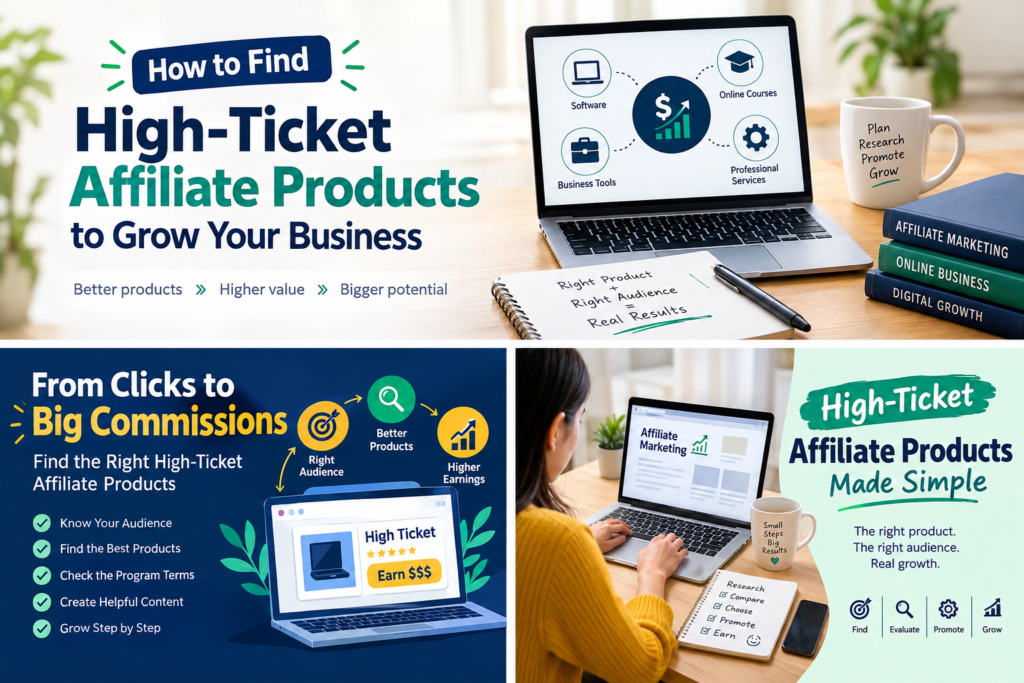
A high-ticket affiliate product can earn you a larger commission per sale than a lower-priced product. But a big advertised payout doesn’t guarantee a good fit for your website, audience, or business.
The best product to promote is one that solves a real problem for your readers, offers genuine value, and has a trustworthy buying experience. Here’s how to find and evaluate high-ticket affiliate products before you start promoting them.
What is a high-ticket product?
A high-ticket affiliate product is a relatively expensive product or service that may pay a larger commission when someone buys through your referral link. Examples can include business software, professional services, premium equipment, or specialized training.
“High-ticket” doesn’t always mean the same price or commission across every niche. Instead of focusing on a fixed dollar amount, look at the product’s price, commission structure, and whether your audience is likely to see enough value to consider buying it. Affiliate programs can differ in how they calculate commissions, so read each program’s terms carefully.
1. Start with your audience’s needs
Before looking for affiliate programs, answer three questions:
- Who visits your website?
- What are they trying to achieve?
- What problems or decisions are they researching?
For example, a site for freelance designers might serve readers who need invoicing software, design tools, or reliable equipment. A site for new business owners might cover accounting services, project-management tools, or business training.
Write down the problems your readers are trying to solve. Then look for products that address those problems. This keeps your recommendations useful instead of making your website feel like a collection of unrelated promotions.
2. Look for products that solve meaningful problems
A product may be expensive, but it still needs to offer clear value. Explore options in your niche and ask:
- Does it solve a problem my audience actually has?
- Can I explain who it is, and isn’t, right for?
- Is the product or service described clearly?
- Can potential buyers compare features, pricing, and limitations before deciding?
Look beyond the commission. A lower-paying product that genuinely helps your readers may be a better choice than a high-paying offer that doesn’t fit.
3. Find potential affiliate products
Start with brands and products you already know in your niche. Search the brand’s website for an affiliate, partner, or referral program. You can also search affiliate networks, industry publications, and product-comparison sites.
Useful search phrases include:
affiliate program + [product category]partner program + [brand]best [product category] for [audience][product] alternatives[product A] vs [product B]
Treat search results as a shortlist, not an endorsement. Check the program’s terms and research the product independently before applying or publishing a recommendation.
4. Evaluate the product and the program
Use this checklist for every offer you’re considering:
Product quality: Is it useful, reliable, and suitable for your readers?
Reputation: Look for credible reviews and complaints. Pay attention to recurring issues, not just one person’s experience.
Commission terms: Check how commissions are calculated, when they are paid, and whether sales can be reversed after a refund or cancellation.
Attribution rules: Find out how referrals are tracked and whether the program explains its attribution window and any other conditions.
Sales experience: Review the product page. Is the price clear? Are the features and limitations explained? Is it easy to understand what the customer will receive?
Affiliate support: Check whether the program supplies accurate product information, approved promotional materials, and a way to get questions answered.
A strong commission matters only if the product is relevant, the program’s rules are clear, and customers have a good reason to buy.
5. Estimate the opportunity without relying on the headline payout
You can compare offers with a simple estimate:
Estimated commission per sale = commission earned from one completed sale
Then consider how many of your readers are likely to be interested and ready to buy. Don’t treat a program’s advertised commission as guaranteed income. Actual results depend on factors such as audience fit, trust, traffic, and whether visitors decide to purchase.
When comparing two offers, ask which one better serves your audience and which one you can explain honestly. The higher commission isn’t automatically the better opportunity.

6. Match the offer to search intent
Create content that matches what readers are trying to do:
- Learning: “What is [product category]?” or “How does [product type] work?”
- Comparing: “[Product A] vs. [Product B]” or “Best [product category] for [audience]”
- Considering a purchase: “[Product] review,” “[Product] pricing,” or “[Product] alternatives”
Be transparent about what you’ve tested or researched. If you haven’t used a product yourself, don’t imply that you have. Focus on verifiable details, pros and cons, and who may benefit from the offer.
7. Start small, then improve
You don’t need to promote a dozen high-ticket affiliate products at once. Begin with one or two that fit your audience. Publish helpful content around the questions readers ask, then track relevant results, such as clicks and completed sales.
Use those results to decide what to improve. If readers click but don’t buy, review the product fit and the page they land on. If readers aren’t clicking, make your recommendation clearer and ensure it belongs naturally in the article.
High-demand Affiliate product categories to research
These categories are worth investigating, but demand alone doesn’t guarantee sales. Choose a specific audience and check that the product, affiliate terms, and competition make sense for your website.
- Business software and AI tools: CRM systems, accounting software, project-management tools, and automation platforms. Consider recurring subscriptions, but compare the program’s terms and the product’s reputation.
- Cybersecurity and privacy: Password managers, business security tools, and identity-protection services. Businesses continue to face growing cybersecurity pressures, making this a relevant area to research. Cybersecurity Spending and AI Threat Trends for 2026 | BCG
- Online education and professional training: Career courses, certification programs, and business training. Look for a clear audience, credible instructors, and transparent course outcomes. Online Education Market Report 2026 – Research and Markets
- Website and e-commerce tools: Hosting, email, store platforms, and payment tools. These may suit readers starting or growing a business, but compare actual commission terms rather than assuming every program pays well.
- Premium financial products or services: These can have high purchase intent, but they require
- extra care. Research the provider, avoid unsupported promises, and make recommendations only when they’re appropriate for your audience.
Be transparent with affiliate links
Tell readers when you may earn a commission from a link. Place the disclosure where people can notice it before they engage with the recommendation, and use clear language. For U.S. audiences, the FTC’s endorsement guidance explains how disclosures apply to affiliate relationships.
Conclusion
To find high-ticket affiliate products, start with your audience’s problems, identify products that genuinely help, and examine the program terms before promoting anything. Then create useful content that helps readers learn, compare, and make an informed choice.
Start with one product your audience needs. Research it carefully, explain it honestly, and build from what your readers respond to.