If you search for the best side hustles in 2026, you’ll probably see the same list over and over again.
Start a YouTube channel. Become a freelance writer. Sell digital products. Manage social media. Build websites. Use AI to automate businesses.
None of those ideas are automatically bad.
The problem is that I’ve started to question how useful another recycled list of “easy side hustles” really is.
So I decided to look in a different direction.
Instead of repeating the usual recommendations, I wanted to find side hustles built around things that are becoming more valuable in 2026: creator content, AI training, business prospecting, niche audiences, paid communities, tiny software products, and user research.
Some require learning. Some require patience. And a few may produce very little money at first.
But that’s exactly what I want from a side hustle list.
A realistic opportunity is more useful to me than an exciting income screenshot.
Here are the seven I’d seriously consider.
1. Become a UGC Creator for Brands
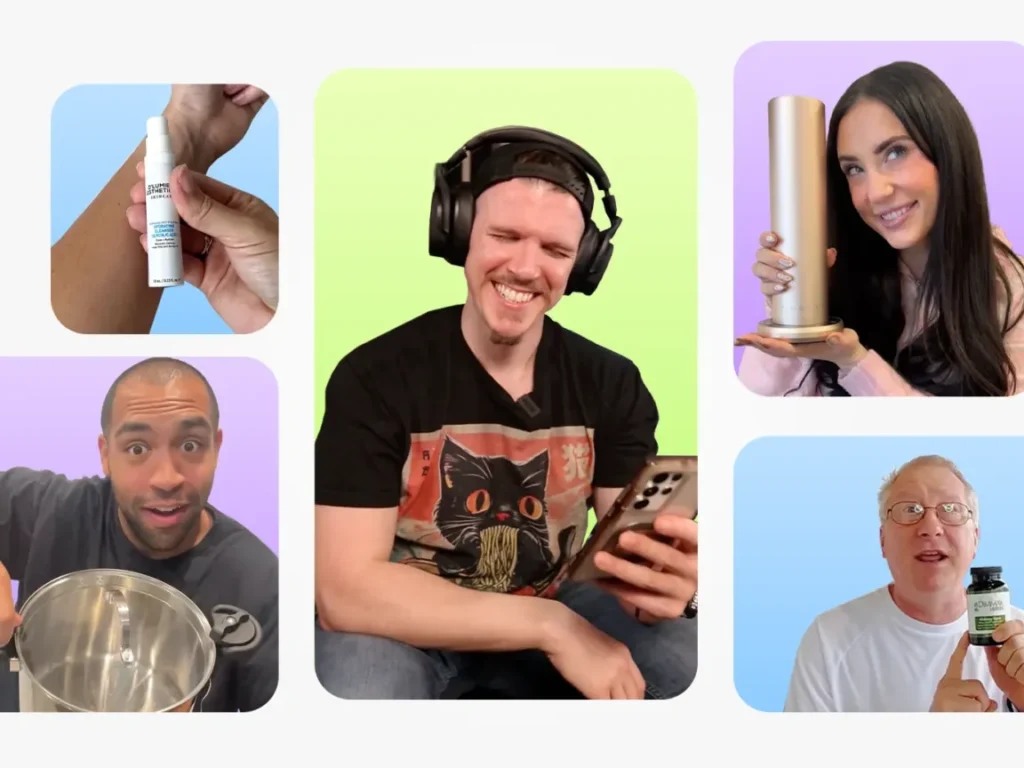
One of the most interesting side hustles I’ve been watching is user-generated content, or UGC.
And there’s an important distinction here.
You don’t necessarily need to become an influencer.
A brand may simply want someone who can create a natural-looking product video that feels like something a real customer would post on TikTok, Instagram Reels, or another short-form platform.
That means the business is paying for your ability to create the content—not necessarily for access to your followers.
That changes the equation considerably.
What would I actually do?
I’d choose one category first.
For example:
- Skincare
- Fitness products
- SaaS tools
- AI apps
- Food and beverages
- Home products
- Consumer electronics
- Productivity products
Then I’d create several sample videos using products I already own.
I wouldn’t wait for a brand to hire me before creating a portfolio.
I’d make the portfolio first.
A simple portfolio could contain:
- A product demonstration
- An unboxing-style video
- A problem/solution video
- A testimonial-style video
- A short “3 reasons I like this” video
Platforms such as Billo and Insense are examples of marketplaces connecting brands and creators. Billo’s current 2026 material specifically describes UGC work as content creation where follower count isn’t necessarily what determines the opportunity.
Why I think this is interesting in 2026
Brands need more creative variations for short-form advertising.
That creates an opportunity for people who can produce believable, useful videos without trying to become celebrities.
I’d rather sell 10 good product videos than spend six months trying to become an influencer.
2. Get Paid to Help Train and Evaluate AI

Here’s an opportunity I think many beginner side-hustle lists overlook:
AI model training and evaluation.
AI companies need humans to evaluate AI-generated responses, compare answers, identify errors, assess reasoning, improve datasets, and perform other tasks that help models become more useful.
The work varies considerably depending on the company and project.
Some opportunities require specialist knowledge.
Others focus more on language, writing, reasoning, coding, mathematics, research, or general evaluation.
Why does this exist?
Because AI isn’t trained simply by throwing more text at a model.
Human feedback can be extremely valuable.
A person may need to decide:
Which of these two answers is more accurate?
Or:
Does this response actually answer the question?
Or:
Is the AI making a factual mistake here?
That’s work a machine can’t always reliably grade by itself.
How I’d approach it
I wouldn’t treat this as a guaranteed monthly salary.
I’d treat it as project-based online work.
I’d investigate legitimate platforms and check whether they’re accepting workers in my country and whether my skills match their current projects.
I’d also avoid anyone asking me to pay money upfront just to access “AI training jobs.”
That’s an immediate red flag.
Why I like this model
The interesting part isn’t just the money.
You’re gaining exposure to how AI systems actually work.
And in 2026, understanding AI evaluation, prompting, quality control, and model behavior can become useful beyond the side hustle itself.
3. Build a B2B Lead Generation & Appointment-Setting Service

This one isn’t glamorous.
That’s exactly why I like it.
Businesses need customers.
A company may have an excellent service but still struggle to consistently find potential customers and get them onto sales calls.
That’s where lead generation and appointment setting come in.
Instead of saying:
“I’ll do social media for you.”
I’d make the offer much more specific:
“I’ll help you identify qualified prospects and book sales conversations.”
That’s a much easier business outcome to understand.
What does the work involve?
Depending on the client, I might:
- Define the ideal customer.
- Research potential companies.
- Find the appropriate decision-makers.
- Build a qualified prospect list.
- Personalize outreach.
- Follow up with interested prospects.
- Qualify responses.
- Schedule appointments.
Tools such as Apollo are built around prospecting, outreach sequences, email, calls, and LinkedIn-based sales engagement.
And there is visible demand for this type of work on freelance marketplaces. Current Upwork listings include lead-generation and appointment-setting services, including freelancers working with B2B businesses.
How I’d start
I wouldn’t try to serve everybody.
I’d choose one market.
For example:
“I help marketing agencies find potential SaaS clients.”
That’s much stronger than:
“I do lead generation.”
Then I’d learn the industry, build a small prospect list, develop an outreach process, and use my first results as proof.
The important thing here is that I’m not selling “AI.”
I’m selling qualified conversations.
4. Start a Niche Newsletter

I’m increasingly convinced that owning an audience is becoming more valuable.
Social media followers are useful, but I don’t control Instagram, Facebook, TikTok, or X.
An email list is different.
That’s why a small, highly focused newsletter is one of the side hustles I’d consider building in 2026.
But I wouldn’t start a generic newsletter about “business.”
I’d go much narrower.
For example:
- AI tools for real estate agents
- Remote-work opportunities for designers
- Software deals for small businesses
- AI tools for YouTubers
- Weekly SaaS deals
- Productivity tools for students
- New tools for ecommerce sellers
- Practical AI news for small-business owners
How would I make money?
I wouldn’t depend on one income source.
A newsletter could eventually combine:
- Sponsorships
- Affiliate commissions
- Paid subscriptions
- Paid recommendations
- Premium research
- Partnerships
Platforms such as beehiiv currently offer newsletter monetization through advertising and paid recommendations, while Substack supports paid subscriptions.
beehiiv’s 2026 reporting also shows continued growth in paid newsletter subscriptions, indicating that newsletters are becoming more than just a content channel.
My strategy would be simple
I’d rather have 1,000 highly interested subscribers than 20,000 people who barely open my emails.
The goal isn’t simply to collect email addresses.
It’s to become useful enough that people look forward to the next email.
5. Build a Paid Online Community

This one is different from selling a traditional course.
Instead of creating a huge course and hoping people buy it, I could build a small community around a specific problem.
For example:
“AI Tools for Freelance Designers”
Members might get:
- Weekly tool discoveries
- Live Q&A sessions
- Accountability
- Job opportunities
- Community discussions
- Templates and resources
- Case studies
- Networking
The important part is that the value comes from ongoing access and interaction.
Platforms such as Skool currently contain paid communities across many different niches, showing that people are already using membership models around specific interests and outcomes.
Gumroad also supports recurring memberships, including paid communities and newsletters.
Here’s how I’d validate it
I wouldn’t spend months building a community before knowing whether anyone wants it.
I’d start with a free group or small audience.
Then I’d ask:
“What problem would you actually pay me to help you solve every month?”
If several people give similar answers, I have something worth testing.
If nobody cares, I haven’t wasted six months building a community nobody wanted.
That’s the beauty of validating first.
6. Build a Tiny Micro-SaaS or AI Tool

This is probably the highest-risk idea on my list—but potentially one of the most scalable.
I’m not talking about building the next ChatGPT.
I’m talking about building something incredibly small that solves one annoying problem.
Think:
One problem. One audience. One simple tool.
For example:
- An AI listing optimizer for a specific marketplace
- A proposal generator for one profession
- A calculator for a specific industry
- A report generator for a particular business
- A tool that converts one type of file into another
- A niche content planning tool
- A simple client reporting dashboard
The advantage of SaaS is that the customer can pay repeatedly rather than buying once. Stripe describes subscription businesses as models where customers pay recurring prices for continued access to a product or service.
The mistake I’d avoid
I wouldn’t build first and search for customers later.
I’d reverse the process.
First:
Find the annoying problem.
Then:
Find people willing to pay for a solution.
Then:
Build the smallest possible version.
If 20 people tell me they would pay $10/month for a useful tool, that’s more interesting than having a beautiful application nobody wants.
And with today’s no-code, AI-assisted development tools, building a small utility is considerably more accessible than building a full software company from scratch.
7. Get Paid for User Research and Product Testing

Finally, I’d keep one extremely simple option on the list:
Paid user research.
This isn’t something I’d expect to replace a full-time income.
I’d think of it differently.
It’s a way to monetize something I already have:
my opinions and experiences as a consumer.
Companies need people to test:
- Websites
- Apps
- Software
- New products
- Advertising concepts
- Customer experiences
- Prototypes
Some studies involve surveys.
Others involve interviews, focus groups, or usability sessions.
For example, Respondent currently connects participants with paid research studies and says its platform includes remote and in-person studies. It currently advertises an average payout of $75 and a typical session length of 45 minutes.
The important reality
I wouldn’t depend on this for predictable monthly income.
You don’t control how many studies you’re matched with.
Instead, I’d use it as a supplemental income stream.
And I’d only use established research platforms.
If a “research opportunity” asks me to pay money before I can participate, I’d walk away.
Which of These 7 Would I Actually Choose?
If I were starting from zero today, I wouldn’t choose based only on the biggest theoretical income number.
I’d choose based on how quickly I could prove that someone would pay me.
Here’s how I’d think about them:
| Side hustle | Startup difficulty | Income potential | My take |
| UGC creation | Low–Medium | Medium | Great for creative people |
| AI evaluation | Low–Medium | Medium | Good supplemental option |
| B2B lead generation | Medium | High | Strong service business |
| Niche newsletter | Medium | High | Excellent long-term asset |
| Paid community | Medium | High | Best with an existing audience |
| Micro-SaaS | High | Very High | Highest upside, but harder |
| User research | Very Low | Low–Medium | Best for extra cash |
I also wouldn’t try all seven.
That’s one of the biggest mistakes I see people make when searching for side hustles.
They find seven ideas and start seven projects.
Then three weeks later, none of them has enough attention to work.
I’d rather spend 90 days on one idea than spend 90 days starting seven.
Conclusion
I don’t think there is a magical “best side hustle” for everyone in 2026.
The best one depends on what you already know, how much time you have, whether you want active or recurring income, and how comfortable you are with selling.
If I wanted faster income, I’d look at B2B lead generation or UGC.
If I wanted to build an audience, I’d choose a niche newsletter.
If I wanted recurring revenue, I’d explore a paid community.
If I had technical skills and patience, I’d experiment with micro-SaaS.
And if I simply wanted occasional extra money without building a business, I’d look at paid research.
The important part is not finding a secret side hustle.
It’s finding one problem that people already pay to solve—and becoming useful enough that they choose to pay you.
That’s a much more boring strategy than “make $10,000 next month.”
But I think boring is exactly what makes it realistic.