
Pinterest affiliate marketing can be an interesting way for beginners to introduce relevant products to people who are already searching for ideas, inspiration, and solutions. Unlike platforms where content is primarily consumed in a social feed, Pinterest also works as a visual discovery and search platform.
The good news is that you do not need to be an experienced marketer to understand the basics. You need a suitable niche, relevant affiliate products, helpful content, and a consistent publishing strategy.
In this guide, you will learn how to set up your Pinterest account, choose affiliate products, create effective Pins, and launch your first affiliate marketing campaign. You will also discover common mistakes beginners should avoid.
What Is Pinterest Affiliate Marketing?
Pinterest affiliate marketing is a marketing method where you share content featuring products or services through affiliate links. When someone clicks your link and completes a qualifying purchase, you may earn a commission according to the affiliate program’s terms.
Here is how the process works:
- Join an affiliate program.
- Choose a relevant product to promote.
- Create useful Pinterest content about that product or topic.
- Add your affiliate link to the appropriate destination.
- A Pinterest user discovers and clicks your Pin.
- If the visitor makes a qualifying purchase, you may receive a commission.
For example, imagine you have a home organization niche. You could create Pins about small-bedroom storage ideas and recommend relevant storage products through an affiliate program.
However, affiliate marketing is not guaranteed income. Results depend on factors such as audience interest, content quality, product relevance, competition, and conversions.

What Do You Need to Start Pinterest Affiliate Marketing?
Before creating your first Pin, prepare a few basic things:
- A Pinterest account, preferably a Business Account.
- A clearly defined niche.
- An affiliate program and relevant products.
- Original images or graphics for your Pins.
- A relevant destination page or permitted affiliate link.
- A simple method to track clicks and conversions.
Do you need a website?
Not necessarily. Some affiliate programs and Pinterest link arrangements may allow direct affiliate links. However, having a website can give you more control over your content, provide space for detailed product information, and help you build an independent traffic source.
Always check the terms of your affiliate program before choosing a direct-link or website-based approach.
Step 1: Create and Set Up Your Pinterest Business Account
Start by creating a Pinterest account. A Business Account is useful for affiliate marketers because it provides access to business-oriented features, including Pinterest Analytics.
You can learn more through Pinterest’s Business Account resources.
After creating your account, complete these steps:
Optimize your profile name and description.
Choose a profile name that reflects your niche. Write a clear description explaining the type of ideas, information, or resources visitors can expect.
Add your website if you have one.
If you own a website, add it to your profile and follow Pinterest’s website-claiming instructions when applicable.
Create relevant boards.
Boards help organize your content around specific topics. For example, a home organization account might have boards such as:
- Small Bedroom Organization
- Kitchen Storage Ideas
- Home Office Inspiration
- Budget-Friendly Home Decor
Keep your boards relevant to your niche instead of creating unrelated collections.
Step 2: Choose a Suitable Affiliate Marketing Niche
Your niche determines the audience you want to attract and the products you can promote.
A good beginner niche should have three important characteristics:
- People actively search for information or ideas related to it.
- You can consistently create helpful content about it.
- Relevant affiliate products or services are available.
Some possible Pinterest niches include:
- Home decor and organization
- Fashion and accessories
- Beauty and skincare
- Gardening
- Cooking and recipes
- Travel planning
- Fitness and lifestyle
- Personal productivity
Do not choose a niche only because you have seen someone claim that it generates high commissions. You should understand the audience and be able to provide useful information.
For example, if you choose the gardening niche, you could publish beginner gardening tips, container gardening ideas, and guides to useful gardening tools.
Step 3: Find Relevant Affiliate Products to Promote
Once you have selected your niche, find affiliate products that genuinely match your audience’s interests.
You can explore affiliate networks such as WarriorPlus, JVZoo, and Digistore24, along with relevant merchant affiliate programs.
Before promoting a product, check:
- Product quality and usefulness
- Vendor or merchant credibility
- Commission structure and payment conditions
- Refund and cancellation policies
- Sales page quality and accuracy
- Affiliate promotional rules
- Restrictions on traffic sources and link placements
A high commission does not automatically make a product a good choice.
For your first campaign, select one relevant offer rather than promoting many unrelated products. This makes it easier to understand how your audience responds.
Step 4: Learn Basic Pinterest Keyword Research
Pinterest users often search for specific ideas, instructions, and products. Understanding their search phrases can help you create more relevant content.
Start with Pinterest’s search bar.
For example, if your niche is home organization, enter a broad phrase such as “small bedroom organization.” Look at the suggestions Pinterest displays and note relevant search phrases.
You can also explore Pinterest Trends to investigate topic interest and seasonal patterns.
Consider these keyword examples:
- Small bedroom organization ideas
- Bedroom storage solutions
- Budget bedroom makeover
- DIY bedroom organization
- Space-saving furniture ideas
Use your primary phrase naturally in your Pin title, description, and relevant board name. Add related phrases where they genuinely describe the content.
Avoid filling your descriptions with unrelated keywords. Your content should make sense to people, not just search systems.
Step 5: Create Your First Affiliate Pins
Your Pin is often the first thing a potential visitor sees. It should communicate a useful idea and accurately represent the destination.
Start with one topic and create an original visual around it.
Choose a relevant Pin design.
Use a clear image, readable text, and a simple layout. A vertical design is a practical starting point for Pinterest content.
For example, a Pin about kitchen organization could use a headline such as:
“7 Smart Kitchen Storage Ideas for Small Spaces”
Write an informative title.
Your title should explain what the user will find after clicking. Avoid exaggerated promises or misleading headlines.
Create a useful description.
Briefly explain the content, naturally include relevant keywords, and tell the reader what they can expect.
Add the correct destination link.
Make sure the link works and leads to the product or content described in your Pin. Check your affiliate program’s rules and Pinterest’s link requirements before publishing.
Disclose your affiliate relationship.
If you may earn a commission, make that relationship clear. For example:
“This Pin contains an affiliate link. I may earn a commission if you make a purchase through it, at no additional cost to you.”
Place the disclosure where people can easily notice it. Do not hide it among hashtags.
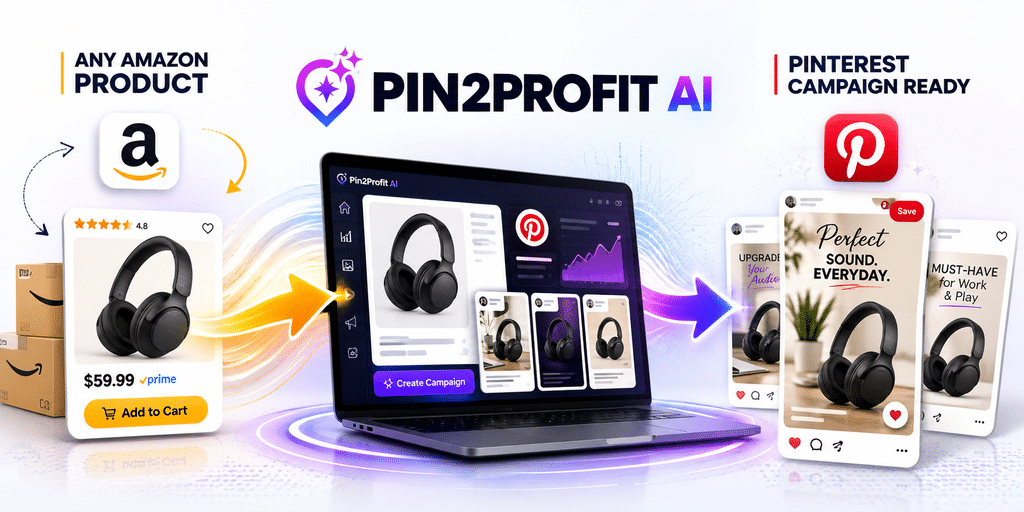
Want to Explore Pin2Profit AI?
If you are researching tools related to Pinterest affiliate marketing, you may want to take a look at Pin2Profit AI. Visit its official sales page, review the available information, and decide whether the product is relevant to your marketing needs.
Step 6: Publish Your First Affiliate Pins
Creating Pins is only one part of the process. You also need to publish them in a relevant and organized way.
Follow these beginner-friendly practices:
- Save each Pin to a relevant board.
- Use accurate titles and descriptions.
- Publish original content that offers value.
- Check that every destination link works.
- Avoid repeatedly publishing identical or nearly identical affiliate content.
- Follow Pinterest’s commercial content and affiliate guidelines.
Pinterest permits affiliate content subject to its policies. Its guidelines emphasize original content, transparency, relevant posting, and moderation in affiliate publishing.
Read the official Pinterest Commercial and Branded Content Guidelines before launching your campaign.
You should also check the rules of your individual affiliate program. A link being accepted by Pinterest does not automatically mean that every affiliate network permits that traffic source.
Step 7: Track and Improve Your First Campaign
Publishing Pins without measuring their performance makes it difficult to understand what works.
Pinterest Analytics can help you evaluate your organic and paid content. You can review metrics such as impressions, engagement, and outbound clicks.
Start by monitoring:
- Impressions: How often your Pins were shown.
- Engagement: How people interacted with your content.
- Outbound clicks: How many times users clicked to visit the destination.
- Affiliate clicks: Clicks recorded by your affiliate platform, where available.
- Conversions: Qualifying purchases or actions recorded by the affiliate program.
Remember that impressions do not automatically mean visitors, and clicks do not guarantee sales.
Compare your Pins over time. If a particular topic receives more relevant outbound clicks, consider creating additional useful content around that subject.
You can learn more about measurement through Pinterest Analytics Help.
Considering an AI-Assisted Marketing Tool?
As you learn more about Pinterest marketing, you may come across tools such as Pin2Profit AI. If you are considering it, review the official product information, pricing, terms, and limitations before deciding whether it is worth using.
View Pin2Profit AI Details Here
Do your own evaluation rather than assuming that any tool will automatically generate traffic, commissions, or sales.
Common Pinterest Affiliate Marketing Mistakes Beginners Should Avoid
Beginners often make avoidable mistakes when starting their first campaigns.
1. Promoting unrelated products
Your affiliate products should match your niche and audience. Irrelevant recommendations can reduce trust.
2. Ignoring Pinterest policies
Repeated, spam-like affiliate publishing or misleading links can create account and distribution risks.
3. Using misleading Pin titles
Your Pin should accurately describe the destination. Avoid making promises that the linked page cannot support.
4. Forgetting affiliate disclosures
Always communicate your financial relationship clearly and conspicuously. The FTC provides useful guidance in its Endorsement Guides FAQ.
5. Choosing products only for high commissions
Product relevance, quality, and vendor credibility matter more than commission percentage alone.
6. Expecting instant results
Pinterest marketing takes research, publishing, measurement, and improvement. There is no guaranteed timeline for traffic or sales.
7. Not tracking performance
Without tracking, you may continue spending time on content that does not attract relevant visitors.
Your First 7-Day Pinterest Affiliate Marketing Action Plan
Here is a simple plan to help you get started without making the process unnecessarily complicated.
| Day | Action |
|---|---|
| Day 1 | Choose one niche and define your target audience. |
| Day 2 | Create and optimize your Pinterest Business Account. |
| Day 3 | Research affiliate programs and select one relevant product. |
| Day 4 | Research keywords and create relevant boards. |
| Day 5 | Design your first original Pins and write their descriptions. |
| Day 6 | Check links, add disclosures, and publish your Pins. |
| Day 7 | Review available analytics and plan your next content ideas. |
This is a starting plan, not a promise of results within seven days. Continue improving your content based on audience response and available performance data.
Frequently Asked Questions
Is Pinterest affiliate marketing suitable for beginners?
Yes. Beginners can learn the process by starting with one niche, one relevant affiliate offer, and a small collection of original Pins. However, learning the platform and building an audience takes time.
Can I do Pinterest affiliate marketing without a website?
It may be possible when Pinterest and your affiliate program permit direct affiliate links. A website can offer additional control and a better place to provide detailed information. Check the applicable rules first.
Does Pinterest allow direct affiliate links?
Pinterest has affiliate guidelines that permit affiliate content subject to its policies. You must be transparent, publish original content, and avoid spam-like behavior. Your affiliate program may have additional restrictions.
Do I need a Pinterest Business Account?
A Business Account is useful because it provides access to Pinterest Analytics and other business features. It is a practical choice for people who want to approach Pinterest marketing seriously.
How many Pins should a beginner create?
There is no universal number that guarantees results. Start with a manageable publishing routine and prioritize originality, relevance, and quality over volume.
How long does Pinterest affiliate marketing take to produce results?
There is no fixed timeline. Results depend on your niche, competition, content quality, audience demand, and other factors. Track performance and improve your strategy instead of expecting immediate commissions.
Final Thoughts: Start Small and Build Consistently
Pinterest affiliate marketing can be a useful channel for beginners who are willing to learn how the platform works and create relevant content.
You do not need to start with dozens of products or hundreds of Pins. Begin with one niche, choose a suitable affiliate offer, research what your audience searches for, and publish original Pins that provide genuine value.
Most importantly, be transparent about affiliate relationships, follow Pinterest and affiliate program policies, and measure your results.
Focus on helping your audience first. Build your strategy through consistent learning and improvement, and give your affiliate marketing efforts time to develop.