If you are exploring digital products, online business, or ways to create content without starting everything from scratch, you may have come across the term PLR.
But what is PLR, and what does it actually allow you to do?
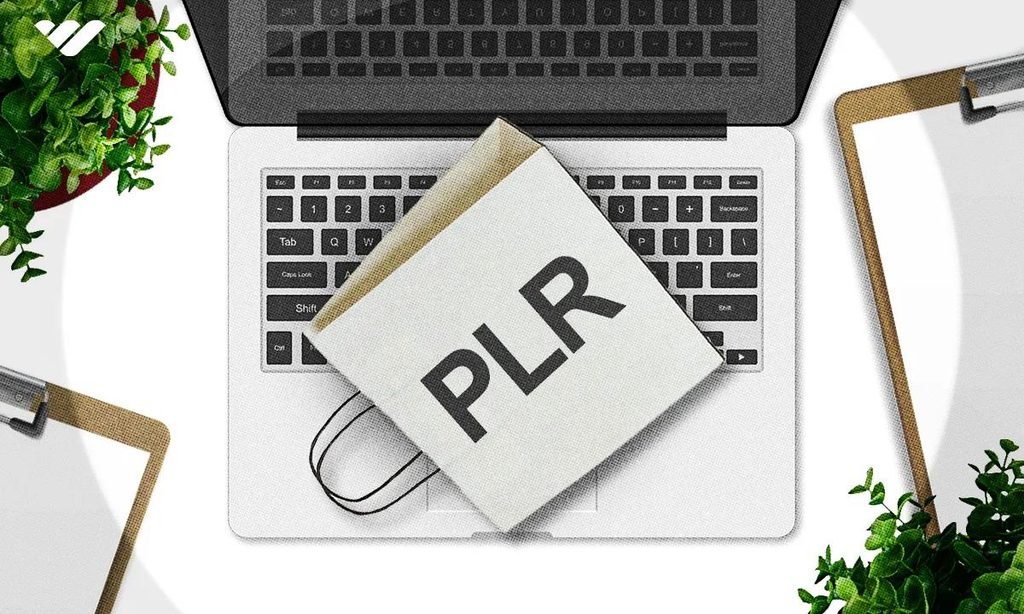
PLR stands for Private Label Rights. It is a type of license that gives buyers permission to use, modify, rebrand, or sometimes resell certain digital products created by someone else. Depending on the license, you may be able to turn an existing ebook, course, template, article, or other resource into something that fits your own brand.
For beginners, PLR can be an interesting way to get started with digital products. However, there is one important detail: buying a PLR product does not automatically mean you can do anything you want with it.
The permissions and restrictions depend on the specific license attached to the product.
In this guide, you will learn how Private Label Rights work, what you can do with PLR products, what restrictions to look for, and how to use them responsibly.
What Is PLR (Private Label Rights)?
Private Label Rights, commonly known as PLR, is a licensing arrangement that allows a buyer to use certain content or digital products under conditions established by the rights holder.
Instead of creating every product from the beginning, you purchase an existing resource and receive permission to use it according to its license.
For example, imagine purchasing a PLR ebook about email marketing. Depending on the license, you might be allowed to:
- Change the title and cover design.
- Edit the content and add your own explanations.
- Include your business branding.
- Publish it on your website.
- Offer it as a free lead magnet.
- Sell it as a digital product.
These permissions are not automatically included in every PLR package. You must check the actual license before using the content.
PLR products are available in different formats, including:
- Ebooks and PDF guides.
- Blog articles and written content.
- Online courses and training materials.
- Social media templates.
- Email sequences.
- Graphics and design templates.
- Video content.
- AI prompts and digital tools.
The main idea is simple: you receive certain usage rights to an existing product, allowing you to adapt it for your own business rather than creating everything from zero.
How Do PLR Products Work?
The process usually involves three parties: the original creator, the PLR vendor or seller, and the buyer.
Here is how it generally works:
1. A creator develops a digital product.
Someone creates an ebook, course, template, or another digital resource.
2. The creator establishes the license.
The rights holder decides which permissions buyers receive. These might include editing, branding, publishing, distribution, or resale rights.
3. The product is offered for sale.
A buyer purchases the product and receives the files along with the applicable license terms.
4. The buyer adapts the product.
If permitted, the buyer can modify the content, add branding, improve the presentation, or customize it for a specific audience.
5. The buyer uses or distributes the product.
Depending on the license, the buyer may publish it, give it away, use it in a membership, or sell it.
One important point: purchasing a PLR product does not necessarily transfer the original copyright to you. It generally provides permission to exercise certain rights under a license. The distinction matters because copyright owners have exclusive rights over activities such as reproduction, distribution, and creating derivative works, subject to applicable legal exceptions.
The U.S. Copyright Office’s copyright overview provides more information about these rights.
What Can You Do With PLR Products?
PLR products can be used in several ways, depending on the license and your business goals.
Here are some common examples.
1. Rebrand Existing Digital Products
One of the most popular uses of PLR is rebranding.
Suppose you purchase an ebook about productivity. If the license permits modification and rebranding, you could:
- Give it a new title.
- Design a different cover.
- Add your logo and business information.
- Rewrite sections to match your audience.
- Include additional examples and resources.
The result can become a more personalized digital product.
However, simply changing the cover and claiming that you created all the original material would be misleading. Be transparent about authorship where appropriate.
2. Create and Sell Digital Products
Some PLR licenses allow buyers to sell modified or unmodified products.
For example, you might purchase a collection of templates and turn them into a digital bundle for a particular audience.
Possible products include:
- Business planning guides.
- Printable planners.
- Educational workbooks.
- Social media content packs.
- Email marketing resources.
- Beginner training materials.
Before selling anything, confirm whether commercial resale is permitted and whether the license imposes pricing, format, or distribution restrictions.
3. Build an Email List With Free Lead Magnets
PLR can also support email marketing.
A lead magnet is a free resource offered in exchange for someone’s permission to receive marketing emails.
For example, you could customize a PLR checklist about website development and offer it to visitors who subscribe to your newsletter.
This can help you attract people interested in your subject and develop a relationship with them through useful email content.
Remember that the license must permit free distribution, and your email marketing should follow applicable consent, privacy, and unsubscribe requirements.
4. Publish Helpful Blog Content
Some PLR packages include articles or written resources that can serve as starting material for a blog.
Instead of publishing them without review, consider using them as research or drafting material.
You can:
- Check factual accuracy.
- Add original explanations.
- Include relevant examples.
- Update outdated information.
- Improve the organization.
- Add useful references.
- Adapt the writing to your audience.
This approach is more valuable than publishing large amounts of unchanged, generic content.
5. Use PLR as a Learning Resource
Beginners do not always need to sell PLR products.
You can use permitted materials to study how digital products are structured, how educational content is organized, and how templates are presented.
For example, a beginner might examine a PLR workbook to understand how exercises, instructions, and worksheets work together.
This can help develop product creation skills while learning about a particular market.
What Are the Different Types of Digital Product Rights?
PLR is not the only licensing model available in the digital product market. You may also encounter MRR, RR, and personal-use licenses.
Understanding the differences can help you avoid purchasing something that does not meet your business needs.
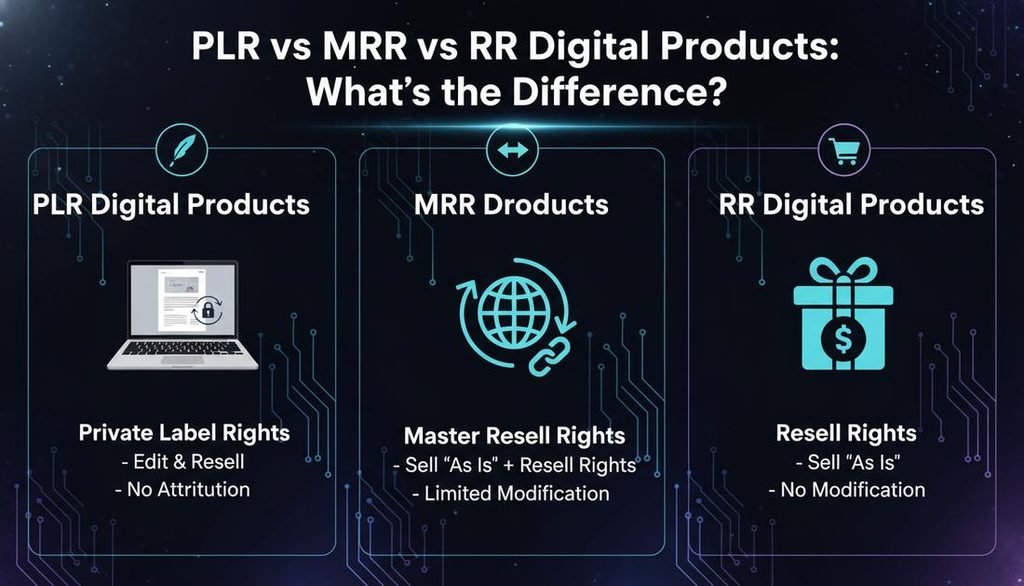
| License type | General meaning |
|---|---|
| PLR (Private Label Rights) | May allow editing, rebranding, and other specified uses. |
| MRR (Master Resell Rights) | Generally allows resale and may include permission to pass resale rights to customers. |
| RR (Resell Rights) | Generally allows you to resell a product under specified conditions. |
| Personal Use Rights | Allows personal use but generally does not permit commercial resale. |
These are common marketplace descriptions, not universal legal definitions. The actual written license always takes priority.
PLR vs. MRR
PLR and MRR are often confused because both can be associated with digital product sales.
The main distinction is that PLR commonly focuses on modification and rebranding permissions, while MRR generally focuses on resale and passing certain resale permissions to customers.
A product with MRR does not automatically give you permission to rewrite or rebrand it.
Likewise, a PLR license does not automatically allow you to pass PLR rights to your customers.
PLR vs. RR
Resell Rights generally permit the buyer to sell the product but may not allow editing or rebranding.
For instance, a license might allow you to sell an ebook while requiring you to keep its original content and branding unchanged.
The exact conditions depend on the agreement.
PLR vs. Personal Use Rights
Personal Use Rights are more restrictive.
You might be allowed to download and use a product for your own learning or personal activities, but not sell copies or distribute it commercially.
If your goal is to build a digital product business, personal-use products are generally not suitable for commercial resale.
What Are the Restrictions of PLR Products?
This is one of the most important sections for anyone considering PLR.
Not all PLR licenses offer the same permissions. Some are flexible, while others include significant restrictions.
Here are several issues to check before using a product.
1. You May Not Be Allowed to Resell the PLR Rights
Some licenses allow you to sell the finished product but prohibit passing the underlying PLR rights to your customers.
For example, you might be allowed to sell a customized ebook as a PDF but not provide the editable source files or allow customers to rebrand and resell it.
2. You May Not Be Allowed to Distribute Source Files
A seller might permit you to sell a finished product while restricting access to its original editable files.
These files could include:
- Word documents.
- Photoshop files.
- Editable presentation files.
- Original design templates.
Always check whether the license allows you to distribute editable files.
3. Some Products Have Pricing Restrictions
Certain licenses may include minimum or maximum resale prices.
Others may require you to follow specific pricing conditions when offering the product.
Do not assume that you can choose any price without checking the agreement.
4. Some Products Cannot Be Given Away
A license may allow commercial resale but prohibit free distribution.
For example, you might be allowed to sell a digital guide but not offer it as a free email subscription bonus.
This is why you should check both resale and giveaway permissions.
5. Third-Party Materials May Have Separate Restrictions
A PLR package may contain images, fonts, illustrations, software, or other materials obtained from third parties.
The seller’s permission to use the main product does not necessarily mean every included asset can be used commercially in every way.
Check whether third-party components have separate licensing terms.
6. You May Not Own the Original Copyright
Receiving PLR permissions does not necessarily make you the copyright owner of the entire original product.
You may have permission to edit and distribute certain material, but the creator can retain copyright ownership.
This distinction is especially important if you plan to claim exclusive ownership or register the complete product as entirely your own original work.
How to Choose Quality PLR Products as a Beginner
The quality of PLR products varies considerably.
A low-priced package is not necessarily a good business opportunity, and a large collection of files does not automatically mean the content is valuable.
Before purchasing, consider the following factors.
Check the Quality of the Content
Look for products that contain useful, relevant, and well-organized information.
Avoid materials that are outdated, poorly written, repetitive, or filled with unsupported claims.
If previews are available, review them before purchasing.
Read the License Carefully
This should be a priority.
Find out whether you can:
- Edit the content.
- Rebrand the product.
- Sell the finished product.
- Offer it as a free bonus.
- Use it on a membership website.
- Include it in a paid course.
- Pass resale rights to customers.
Do not rely only on promotional descriptions. Read the actual license.
Research the Vendor
Check whether the vendor provides clear product information, licensing details, contact information, and customer support.
Look for independent feedback where available.
Be cautious of unrealistic business claims or promises of guaranteed income.
Consider Your Target Audience
A PLR product should solve a problem for a specific group of people.
For example, a social media marketing guide may be relevant to small business owners, while a budgeting workbook may be more useful to people who want to organize their personal finances.
The more closely the product matches your audience’s needs, the easier it is to create a useful offer.
Evaluate the Customization Required
Some PLR products need only minor improvements, while others require substantial editing.
Consider how much time you will need to:
- Correct errors.
- Update information.
- Improve the design.
- Add original value.
- Check references and permissions.
A product that requires extensive rewriting may not save as much time as you initially expected.
How Can Beginners Get Started With PLR?
You do not need to purchase dozens of PLR packages to begin.
A more practical approach is to start with one product and understand the process.
Step 1: Choose a specific niche.
Select a subject you understand or are willing to research. Examples include online marketing, productivity, personal development, education, and small business.
Step 2: Identify an audience problem.
Think about what your potential customers need help with.
A focused product that solves one clear problem is often more useful than a broad collection of unrelated information.
Step 3: Find a relevant PLR product.
Look for a product that matches your audience and offers appropriate licensing permissions.
Step 4: Review the complete license.
Confirm what you can edit, publish, sell, distribute, or pass on to customers.
Step 5: Improve the original material.
Correct mistakes, update information, add examples, and make the product easier to understand.
Step 6: Create your branding and presentation.
Use a suitable title, design, and layout. Make sure any included graphics and other assets are properly licensed.
Step 7: Choose an appropriate distribution method.
Depending on your license, you might sell the product through your website, offer it as a lead magnet, or include it in a membership.
Step 8: Collect feedback and improve.
Pay attention to customer questions and feedback. Update the product when necessary.
The goal should be to create something genuinely useful rather than simply uploading a purchased file and expecting customers to find value in it.
Can AI Tools Help With PLR Products?
Yes. AI tools can help with certain parts of the PLR workflow, particularly when you need to brainstorm ideas, organize information, improve drafts, or develop supporting content.
For example, AI can assist with:
- Generating content ideas.
- Creating article outlines.
- Developing product descriptions.
- Improving readability.
- Suggesting alternative titles.
- Organizing ebook chapters.
- Creating social media content.
- Developing prompts for specific tasks.
However, AI-generated content still requires human review. It can produce inaccurate information, generic explanations, or statements that need additional verification.
If you are working with AI-related digital products, a specialized resource such as My AI Super Prompt Generator may be worth exploring. It is an example of an AI prompt-focused product in the digital product marketplace.
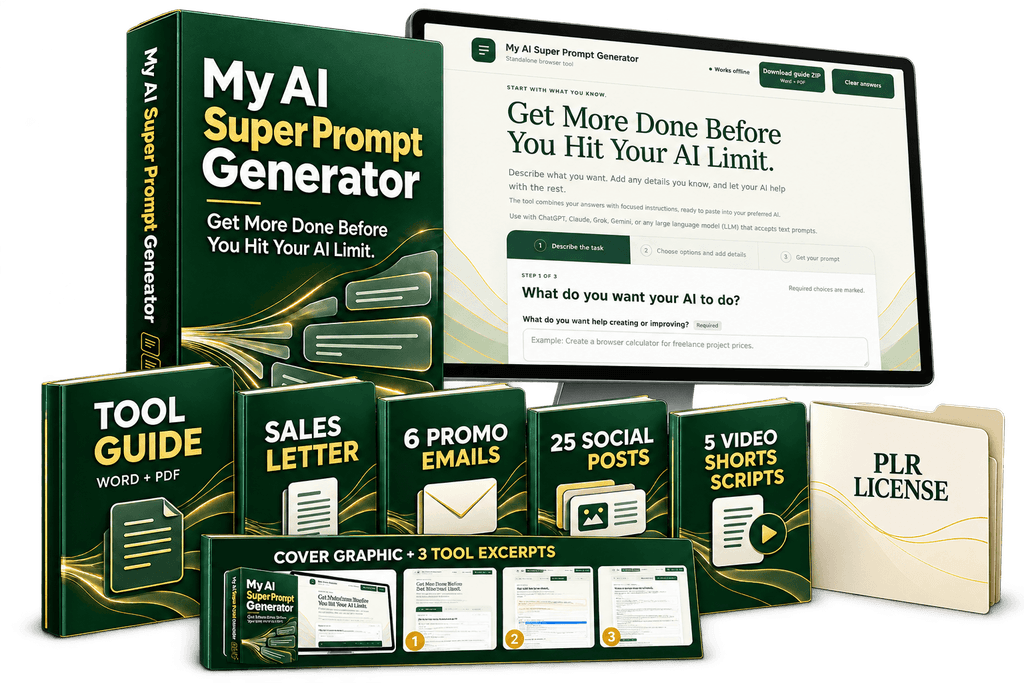
You can check out My AI Super Prompt Generator here if you want to explore the offer.
Before purchasing, review the current offer details, included features, and applicable PLR license so you understand exactly what is being provided.
How to Use AI Responsibly With PLR
AI can make content development more efficient, but it should not replace careful editorial judgment.
A responsible workflow looks like this:
- Review the original PLR material.
- Identify outdated or unclear information.
- Use AI to brainstorm improvements or reorganize sections.
- Verify important facts using reliable sources.
- Add useful examples and original explanations.
- Check the final material for accuracy and consistency.
- Confirm that the original PLR license permits your intended use.
Also, avoid submitting confidential or sensitive information to AI services unless you understand their data handling policies.
Common PLR Mistakes Beginners Should Avoid
PLR can be useful, but some common mistakes can create unnecessary problems.
Publishing unchanged content without reviewing it: A purchased product may contain outdated information or errors. Review it before distributing it.
Ignoring the license: Assuming that all PLR products allow unlimited editing, resale, and redistribution can lead to licensing disputes.
Choosing products based only on price: A cheap package with poor content may create more work than value.
Using misleading marketing claims: Do not promise customers guaranteed results or income simply because a PLR product makes those claims.
Selling the same generic material without improvement: If many sellers offer identical content, your product may struggle to stand out. Add meaningful value through customization and better presentation.
Ignoring third-party copyright: Check images, fonts, graphics, and other included materials rather than assuming they are covered by every permission in the main license.
Treating PLR as guaranteed passive income: Purchasing a product does not automatically generate customers or sales. You still need a useful offer, an audience, responsible marketing, and ongoing work.
Is PLR Worth It for Beginners?
PLR can be a useful starting point for people who want to explore digital products without developing every resource from scratch.
It can reduce the initial content creation workload and provide a foundation for building ebooks, templates, lead magnets, and other digital resources.
However, it is not a shortcut to guaranteed business success.
The real value depends on the quality of the product, the permissions in its license, the relevance to your audience, and the improvements you make before distributing it.
For beginners, the best approach is to start small. Choose one relevant product, understand its license, improve the material, and test whether it provides genuine value to your intended audience.
If you are also exploring AI-assisted content creation, you can take a closer look at My AI Super Prompt Generator as one additional resource to research. Check its current terms and features before deciding whether it fits your needs.
You can check details review click here
Frequently Asked Questions About PLR
What does PLR stand for?
PLR stands for Private Label Rights. It refers to a licensing arrangement that gives buyers permission to use certain digital content or products under specified conditions.
Are PLR products free?
Most PLR products are sold for a one-time price, although free PLR resources are also available. Always review the license because free products can have restrictions too.
Can I sell PLR products?
You can sell a PLR product only when its license permits commercial resale. Some licenses allow resale of the finished product but prohibit transferring PLR rights or editable source files.
Can I edit PLR content?
Many PLR licenses allow editing and rebranding, but this is not universal. Check the specific license before making changes.
Is PLR the same as copyright ownership?
No. PLR generally grants specified usage permissions. It does not automatically transfer ownership of the original copyright to the buyer.
Can I use PLR products on my website?
Often, yes, but the license must permit the particular use. Some products allow website publishing, while others restrict public distribution or require specific formats.
Can I use PLR products to build an email list?
Yes, if the license permits free distribution. You can customize an appropriate PLR resource and offer it as a lead magnet while following applicable email marketing and privacy requirements.
Is PLR legal?
PLR is a legitimate licensing model when the rights holder has the authority to grant the permissions being offered and users follow the applicable license terms and laws. Problems can arise when products contain unauthorized material or buyers exceed their permitted rights.
What is the difference between PLR and MRR?
PLR commonly focuses on editing and rebranding permissions, while MRR generally focuses on resale and the ability to pass certain resale rights to customers. The actual license determines what is permitted.
Where can I find PLR products?
PLR products are available through specialized digital product marketplaces, independent creators, and digital product vendors. Research the seller, inspect the product, and read the license before purchasing.
Final Thoughts
Understanding Private Label Rights is an important first step if you are interested in creating or selling digital products.
PLR can provide a useful foundation, but the license determines what you can actually do with the material. Take time to understand the permissions, respect restrictions, and improve the content before sharing it with an audience.
Most importantly, remember that a successful digital product business is built on value and trust—not simply on the number of products you can purchase.
Start with one relevant product, make it genuinely useful, and build from there.